


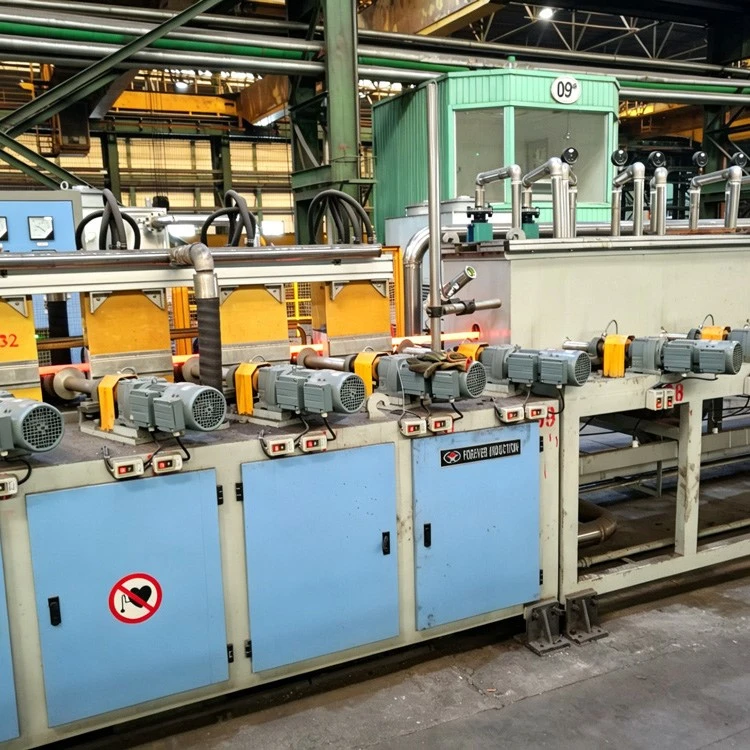
For high-strength steel bars produced through a quench-and-temper route, heat treatment adjusts the microstructure to achieve the required strength and toughness. This process is not necessary for every type of rebar. The appropriate production route depends on the steel grade, application, and applicable standard.
Quenching generally involves heating the steel to a specified temperature and then cooling it under controlled conditions. For steels suitable for hardening, this can produce a hardened structure and increase strength and hardness. The result depends on carbon content, alloying elements, section size, and cooling conditions.
After quenching, the steel may retain high residual stresses and have insufficient toughness. Tempering is therefore usually required. Controlled reheating adjusts the structure, improves toughness, and reduces some quenching stresses while maintaining the required strength.
A higher tempering temperature is not automatically better. Each material requires an appropriate temperature and treatment time. Excessive tempering may reduce strength below the target, while insufficient tempering may fail to deliver the required balance of properties.
As an equipment manufacturer, we focus on coordinating the hardening and tempering systems. Equipment and process settings must suit the material and target properties. Results are then verified through agreed tests, including tensile testing, to confirm that the process meets product requirements.