


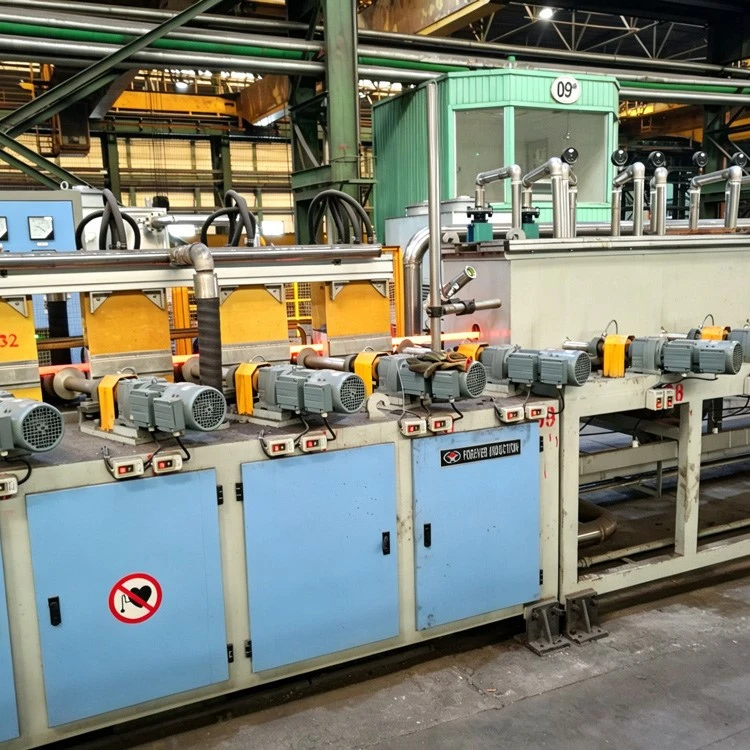
Yes. A steel bar induction heating quenching and tempering production line can be configured for continuous automatic production by integrating feeding, induction heating, conveying, cooling, and discharging systems.
The automation level depends on the equipment configuration and production requirements.
How Does Continuous Production Work?
1. Feeding: Steel bars enter the production line through the feeding system.
2. Induction Heating: The bars pass through the heating section and reach the required process temperature.
3. Quenching and Tempering: The workpieces undergo quenching and tempering according to the selected material and process requirements.
4. Conveying and Discharging: The roller system moves the bars through the production line and transfers treated workpieces to the discharging section.
What Are the Main Automation Features?
The roller conveying system can support continuous material movement and workpiece rotation. Independently controlled sections help coordinate feeding, heating, and discharging.
An infrared temperature measurement system combined with PLC-based closed-loop control helps monitor and regulate heating temperature. Depending on the configuration, the control system can also provide real-time parameter displays, data recording, fault indication, and alarms.
What Should Buyers Consider?
Before selecting an automated production line, evaluate:
Steel bar diameter and material grade
Required hourly production capacity
Quenching and tempering requirements
Workshop layout and material handling
Temperature monitoring and control functions
Continuous automation can reduce manual material handling and improve coordination between production stages. However, process settings and finished-product quality still require appropriate monitoring and inspection.
As a manufacturer, we can discuss a suitable steel bar induction heating quenching and tempering production line based on your workpiece specifications and production requirements.