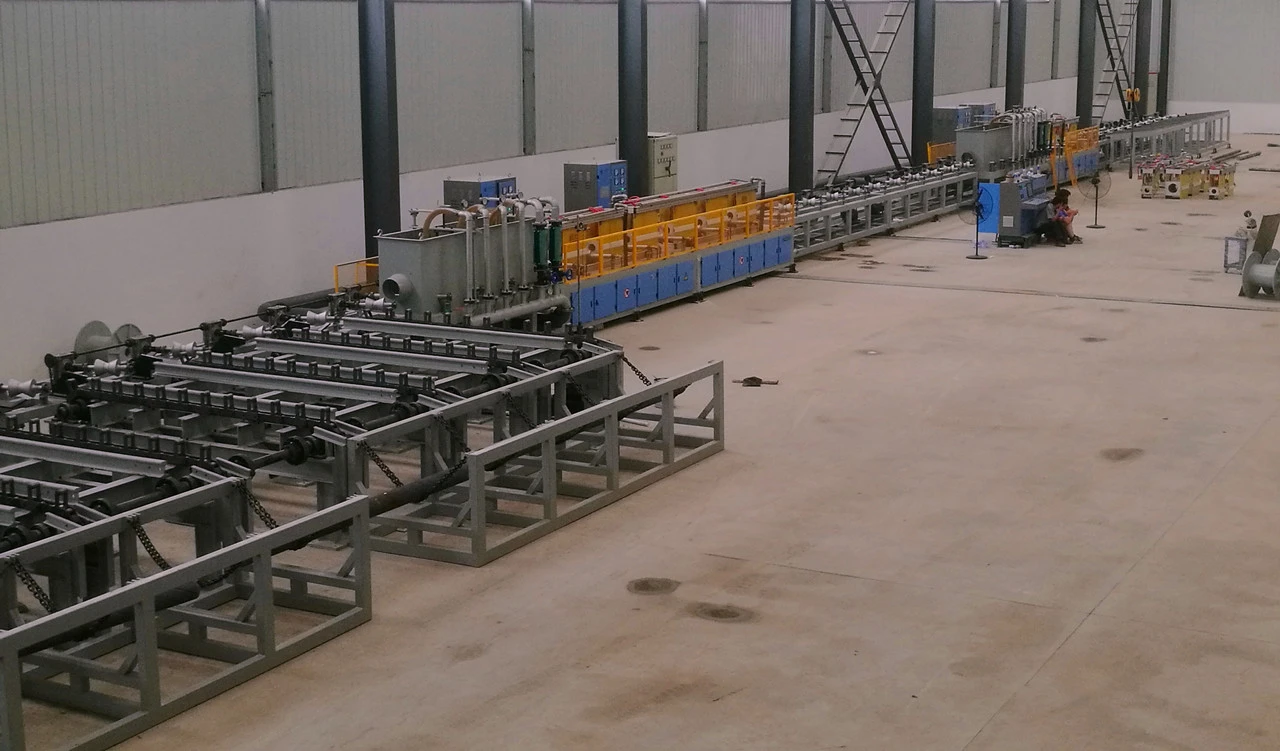

The purpose of quenching is to increase the steel's hardness and wear resistance, whereas the purpose of tempering is to relieve quenching stresses and adjust mechanical properties (such as enhancing toughness and reducing brittleness).
Quenching involves heating the steel above its critical temperature to form austenite, followed by rapid cooling (e.g., in water or oil); this transforms the austenite into highly hard martensite but significantly reduces ductility and toughness while generating internal stresses. Tempering involves reheating the quenched steel to a specific temperature below the critical range, holding it there, and then cooling it slowly; this causes the martensite to decompose into more stable microstructures (such as tempered martensite or sorbite), thereby reducing internal stresses, improving overall mechanical properties, and achieving a balance between hardness and toughness. These two processes complement each other: quenching provides the base hardness, while tempering ensures the material's performance in actual application.