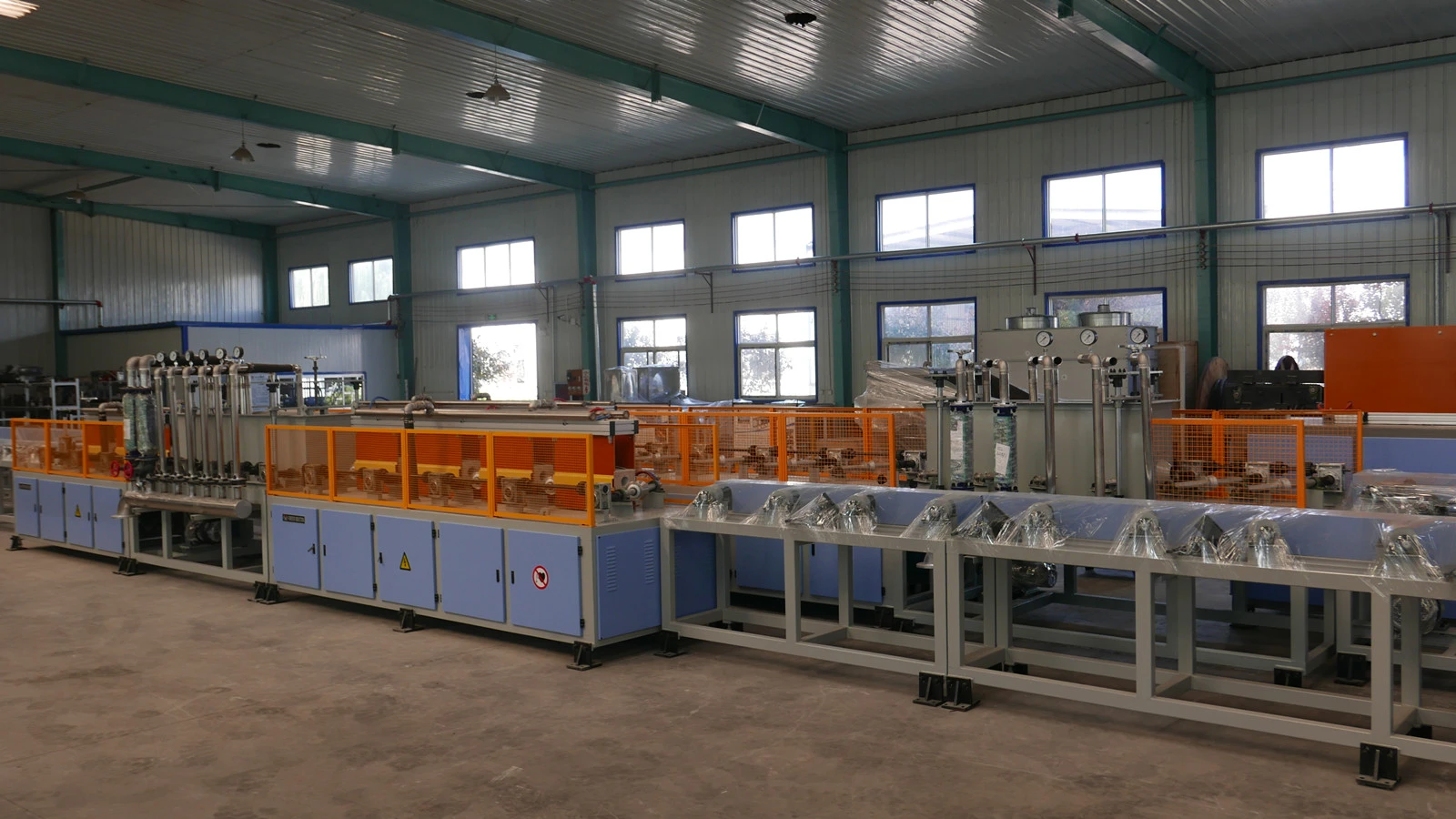

Quenching and tempering is a key heat treatment process for metal materials. It is widely applied across sectors such as aerospace, automotive manufacturing, mechanical machining, and power equipment, as well as in general industrial manufacturing and construction. This process not only enhances the hardness and toughness of the materials but also improves their overall properties and performance, thereby meeting the diverse requirements of various application fields.
Mechanical Manufacturing and Automotive Parts: Widely used in the production of engine crankshafts, axle shafts, gears, connecting rods, and various drive shafts. Through quench-and-temper treatment (quenching followed by high-temperature tempering), the steel bars achieve excellent comprehensive mechanical properties, meeting the demands of high-load operations.
Wind Power and Energy Equipment: Specifically used for the in-line quench-and-temper treatment of high-strength bolts, threaded rods, and tower connection components for wind power applications, ensuring that fasteners possess sufficient tensile strength and fatigue resistance to withstand extreme environments.
Mining and Construction Machinery: Used in the production of wear-resistant components-such as mining support parts, hydraulic props, and excavator bucket tooth bases-where surface or bulk strengthening extends equipment service life under harsh operating conditions.
Tool and Die Manufacturing: Employed for the pre-treatment or final heat treatment of high-carbon steel and alloy tool steel bars (e.g., for cutting tools, cold-stamping dies, and measuring instruments); low-temperature tempering maintains high hardness while relieving internal stresses to prevent edge chipping.
Construction and Steel Structures: Used for the normalizing or quenching and tempering of rebar and steel structural connectors; this process alleviates residual stresses from cold working, enhances material ductility and machinability, and ensures the safety of building structures.
Bearings and Precision Components: Utilized for the quenching and tempering of bearing balls, rollers, and precision shaft stock, ensuring dimensional stability and exceptional contact fatigue strength.
These systems typically utilize induction heating technology, offering advantages such as rapid heating, precise temperature control, and minimal oxidation or decarburization; they are particularly well-suited for the continuous, high-volume production of steel bars with diameters ranging from 12 mm to 150 mm.